Stacked Column charts allow you to visualize both the total value and the individual contribution of each segment within that total.
They are especially useful when you want to:
- compare totals across categories
- understand how different parts contribute to a whole
- analyze composition within each category
- visualize grouped data in a compact vertical format
In this tutorial, you will reuse the Sales Tracking list created in the previous tutorial to create a Stacked Column chart.
Instructions
Step 1: Prepare the data source
We will reuse the Sales Tracking list.
The list contains:
- Month
- 2025 Sales
- 2026 Sales
- Index
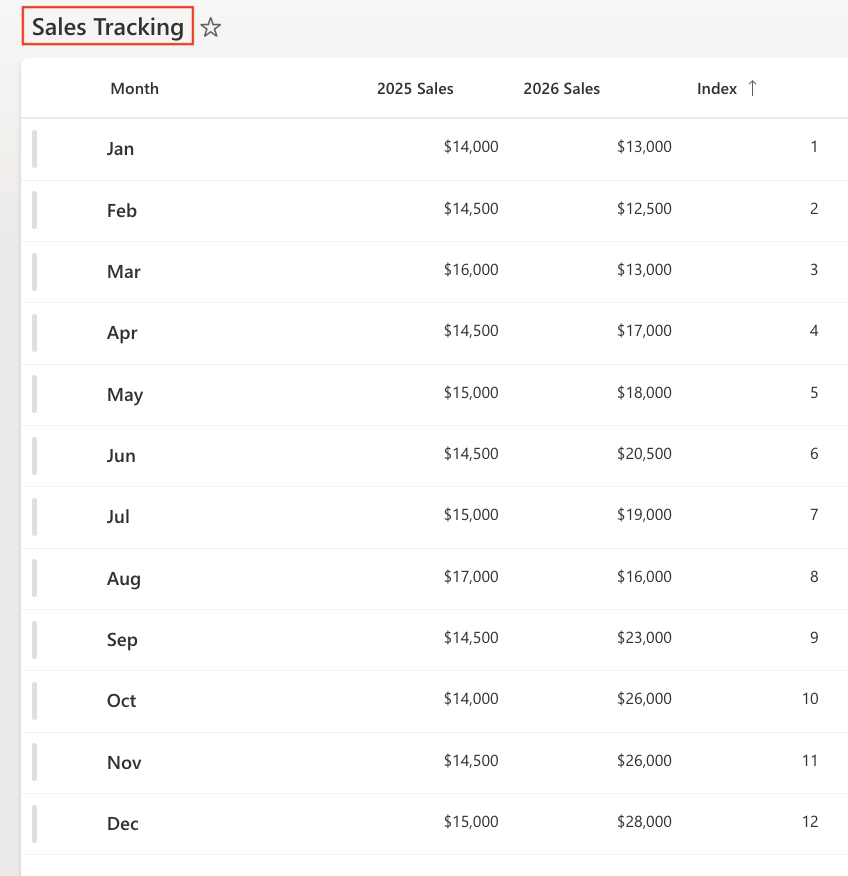
Make sure the view is sorted by: Index (Ascending)
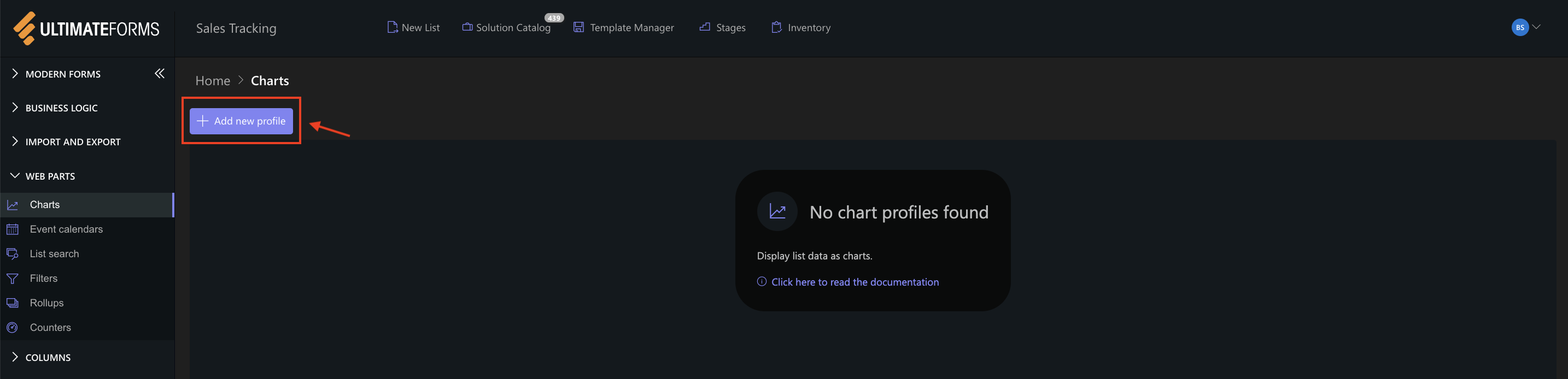
Step 2: Open Charts in Ultimate Forms
- Open Design
- Select Charts
- Click Add new profile
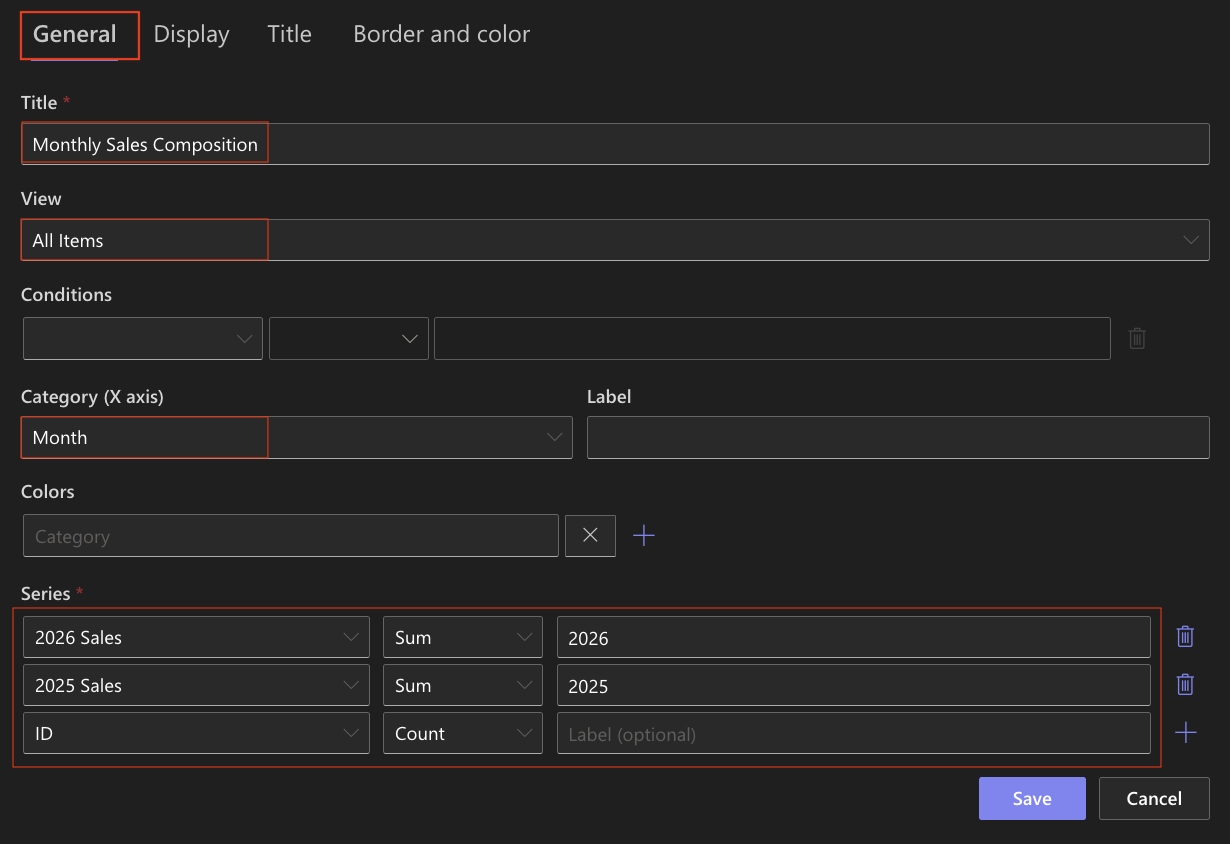
Step 3: Configure General settings
- Title: Monthly Sales Composition
- View: All Items (or your sorted view)
- Category (X axis): Month
- Colors (optional)
- Add two Series:
- Series 1:
- Column: 2025 Sales
- Aggregation: Sum
- Label: 2025
- Series 2
- Column: 2026 Sales
- Aggregation: Sum
- Label: 2026
- Series 1:
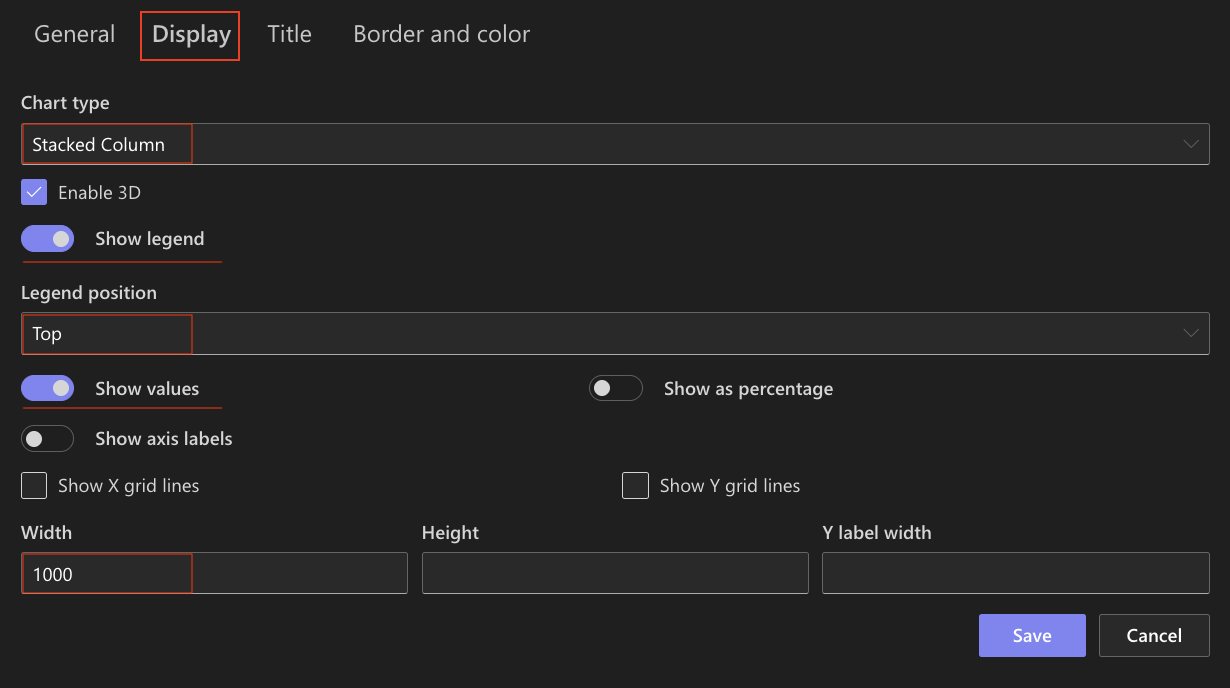
Step 4: Configure Display settings
Open the Display tab.
- Chart type: Stacked Column
- Enable 3D - Optional (can be enabled for a more visual effect)
- Show legend: Enabled
- Legend position: Top
- Show values: Enabled
- Width: 1000
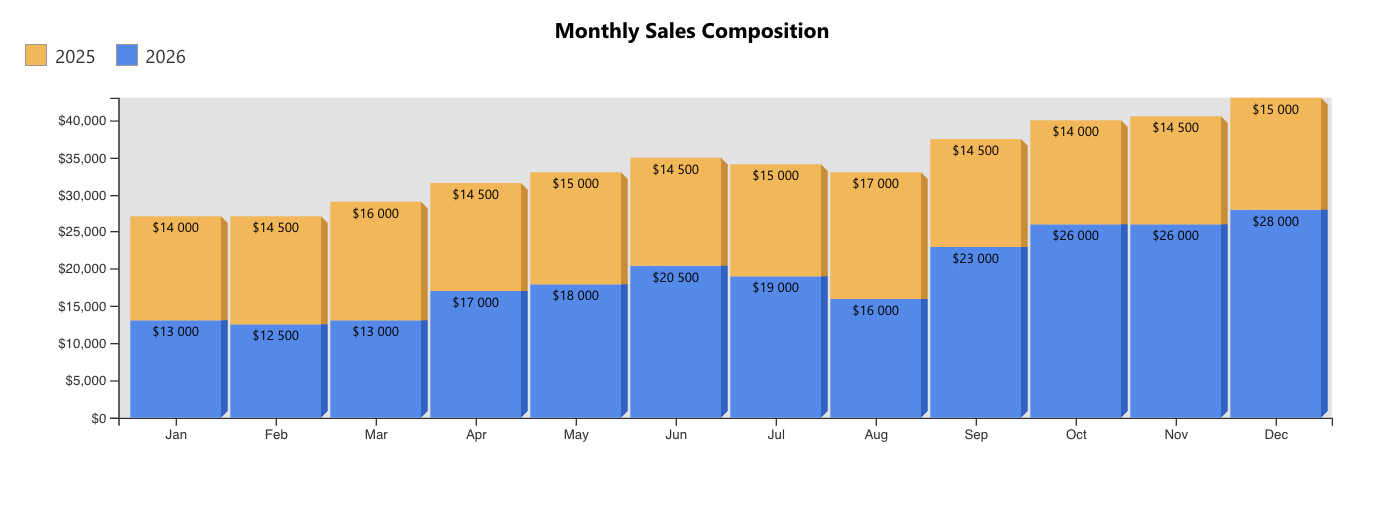
In a Stacked Column chart, values are stacked on top of each other, forming a total for each category.
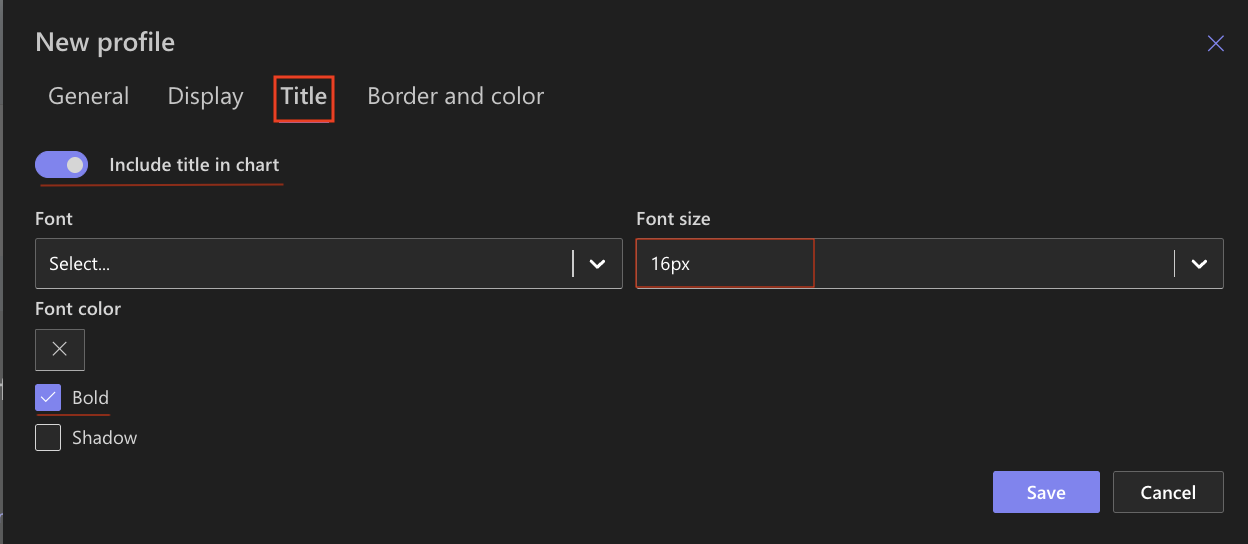
Step 5: Configure Title settings
- Include title: Enabled
- Font size: 16px
- Bold: Enabled
Step 6: Save the chart profile
- Click Save
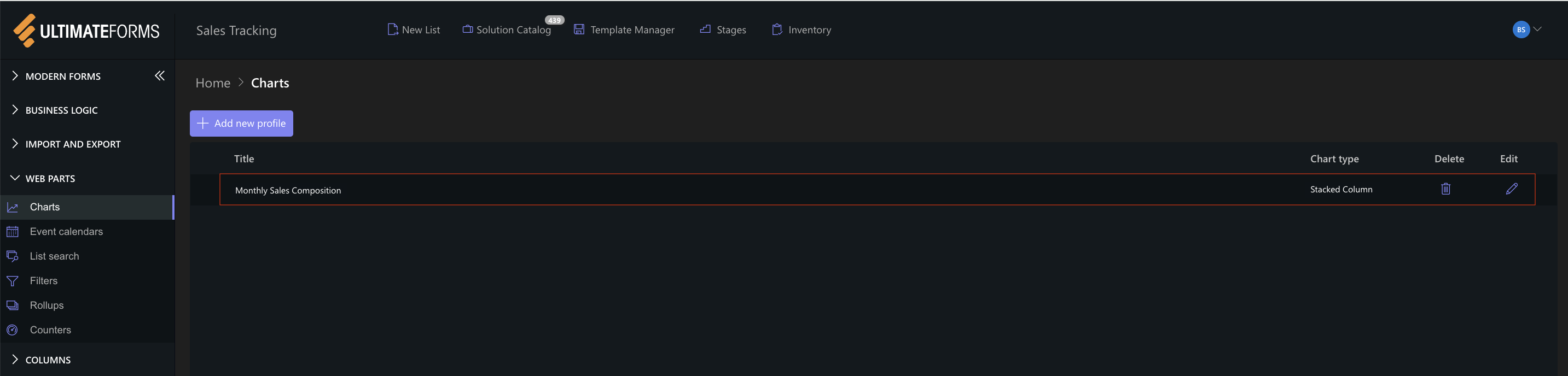
The Stacked Column chart profile is now available for use.
Step 7: Add the chart to a SharePoint page
After saving the chart profile, you need to add it to a SharePoint page using a web part:
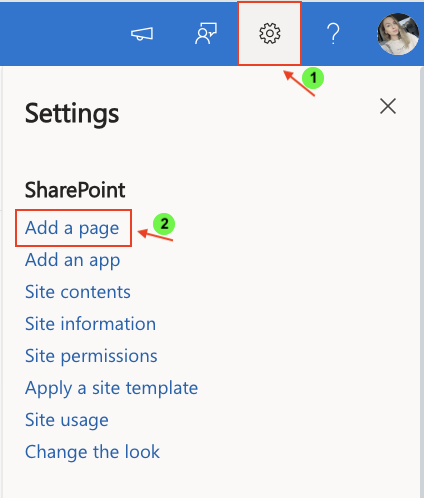
- Create a new SharePoint page.
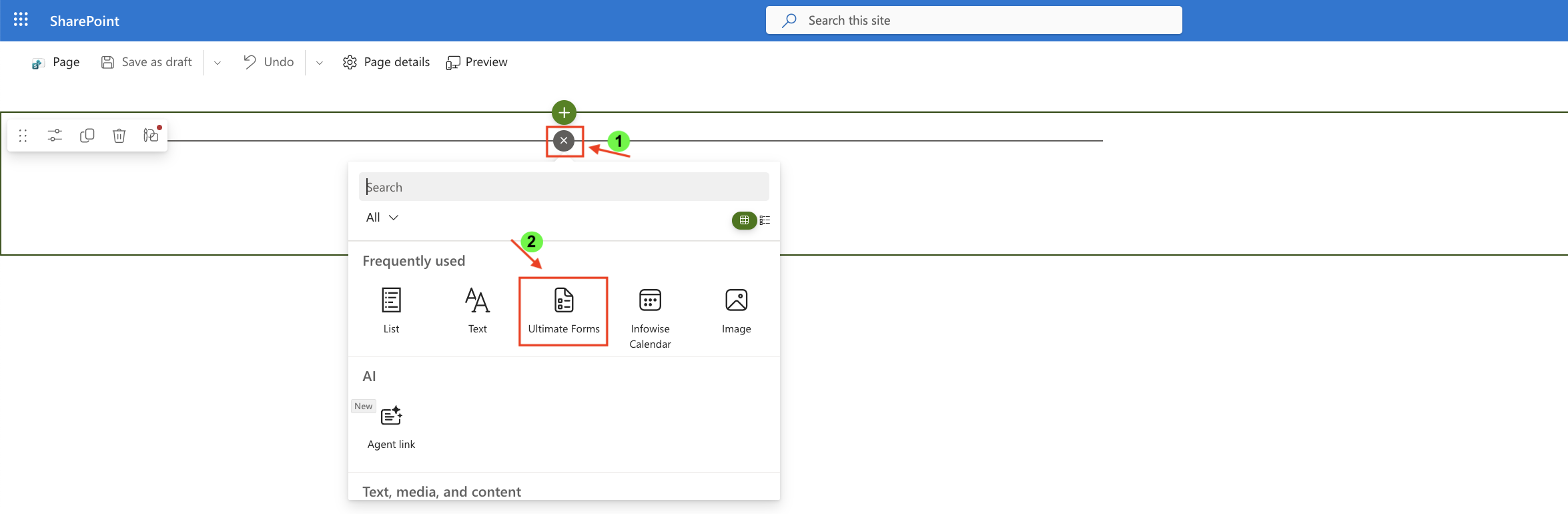
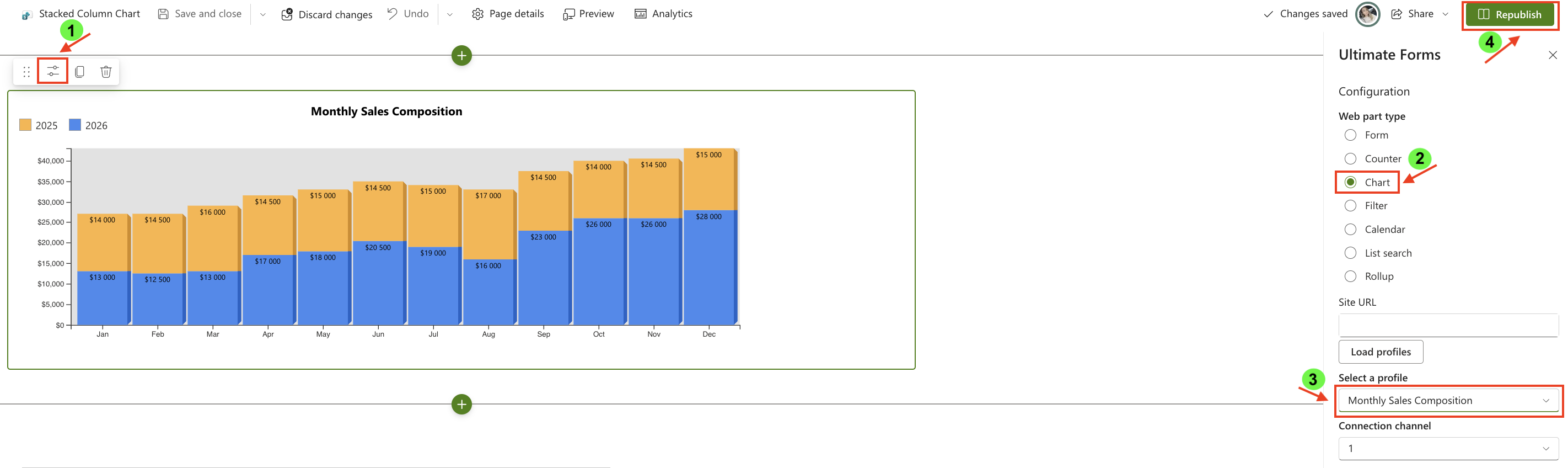
- Click the + button and add the Ultimate Forms.
- Once added, click the Edit Properties.
- In the web part properties:
- Set Type to Charts
- Select the profile: Monthly Sales Composition
- Publish the page
Result
The Stacked Column chart displays total monthly sales while showing how each year contributes to that total.
This makes it easy to:
- compare overall performance
- understand composition within each month
- analyze how values combine into totals
Compare with Column Chart
To better understand the difference, compare this chart with the standard Column chart.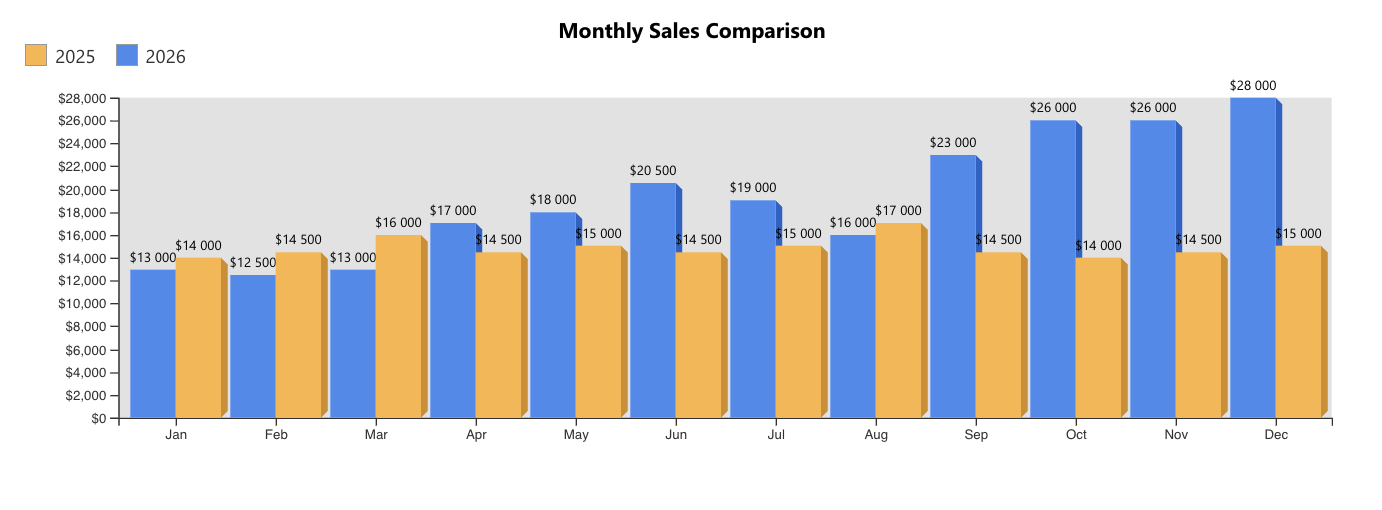
What changes:
- Column chart → values are shown side-by-side
- Stacked Column chart → values are stacked into a single column
When to use each:
- Use Column chart when you want to compare values directly
- Use Stacked Column chart when you want to show contribution to a total
Summary
In this tutorial, you learned how to create a Stacked Column chart to visualize how multiple values contribute to a total. This type of chart is useful for understanding both composition and overall distribution across categories.