SharePoint data can become finished Word documents automatically. The recipe in Ultimate Forms: design an ordinary Word document, drop in placeholders, column names in double square brackets, and upload it as a print template. From then on, one click fills the template with any item's data and delivers a polished .docx or PDF. Add an action, and the click disappears too: documents generate themselves when a status changes or a date arrives, and email themselves where they need to go. This guide walks the full setup, the automation, and the one formatting rule that prevents most support tickets.
The gap between data and documents
Every process that lives in a list eventually needs to produce a document. The approved purchase request becomes a purchase order for the vendor. The completed inspection becomes a signed report for the file. The quote, the contract, the certificate, the confirmation letter: the data is in SharePoint, but the deliverable is a document.
The usual bridge is a person. Someone opens the item, opens a Word file saved from last time, and retypes values from one window into the other. It costs time, and worse, it costs accuracy, because the retyped document and the list item begin drifting apart the moment someone edits one and not the other.
The Print component closes the gap without the person. A template holds the layout; the item supplies the values; the output is generated fresh on every run, so the document always says what the data says.
Why a Word template
The Print component offers Simple and Advanced template modes, and for PDFs those are often enough. But a Word template has an unbeatable argument: you design it in Word, with everything Word can do.
Your logo, your fonts, your letterhead. Headers and footers, numbered clauses, table-based layouts that pin every value to its place on the page. The people who own document standards in your organization already work in Word, which means they can own the template too, without learning a design tool. One template serves both output formats: upload it once, and it drives Word and PDF generation alike.
Building the template
Create the document in Word exactly as the finished output should look. Wherever an item value belongs, type the column name surrounded by double square brackets: [[Title]], [[Customer Name]], [[Approval Date]]. Save as a regular .docx:
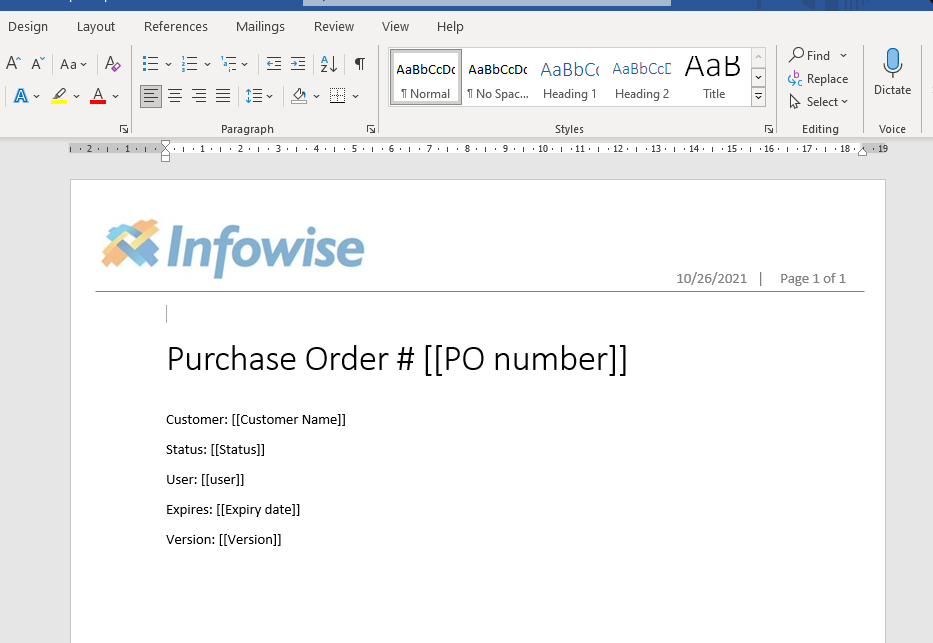
Every SharePoint column type is supported, including the special Ultimate Forms types. Repeating sections render as proper multi-row content, which is what turns an order into an order with line items, and image columns place the actual picture into the document, not a link to it.
The one rule that saves support tickets
Keep styling out of the placeholder itself. Bold the text around [[Customer Name]], never the characters inside the brackets.
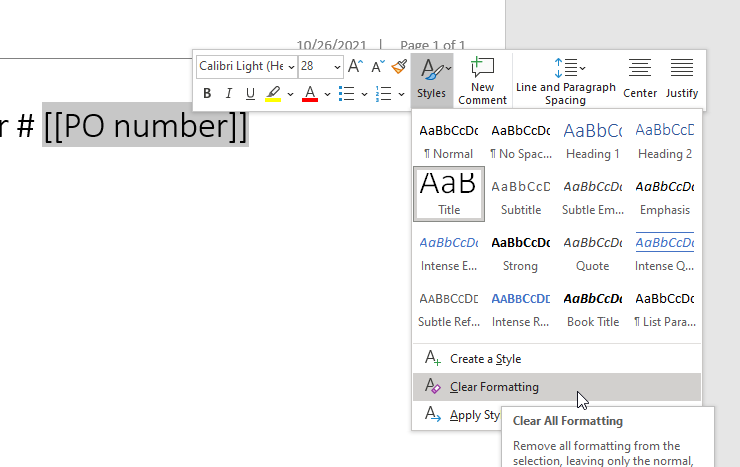
The reason is invisible but mechanical: when you format part of a placeholder, Word fragments the text behind the scenes, and the Print component no longer sees one clean column name. The symptom is a placeholder that survives into the output unreplaced. The fix is just as mechanical: select the placeholder in Word and clear formatting from the menu bar, then re-apply styles around it:
Make this a habit when building templates and the single most common generation problem never happens to you.
Wiring the template to the list
Open the list, click the Design button, and switch to Print. Create or modify a print template, turn on Use MS Word template mode on the first tab, and upload your document:
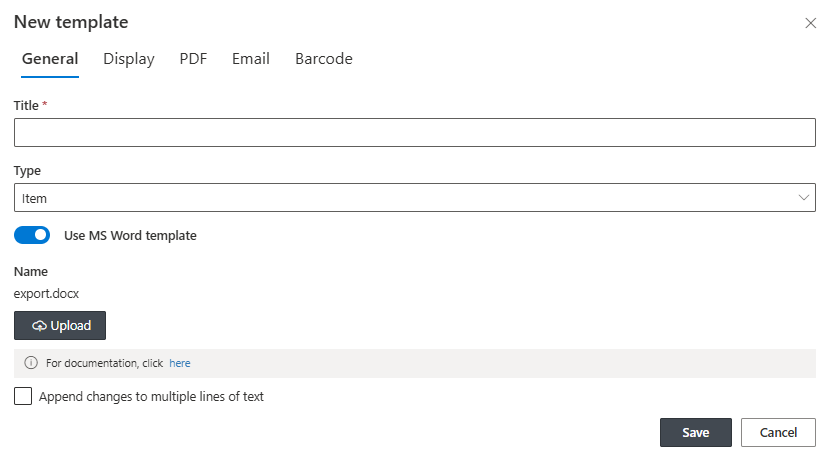
That is the entire configuration. Back on the list, select an item, click Print, and click the Word icon in the top right corner of the preview:
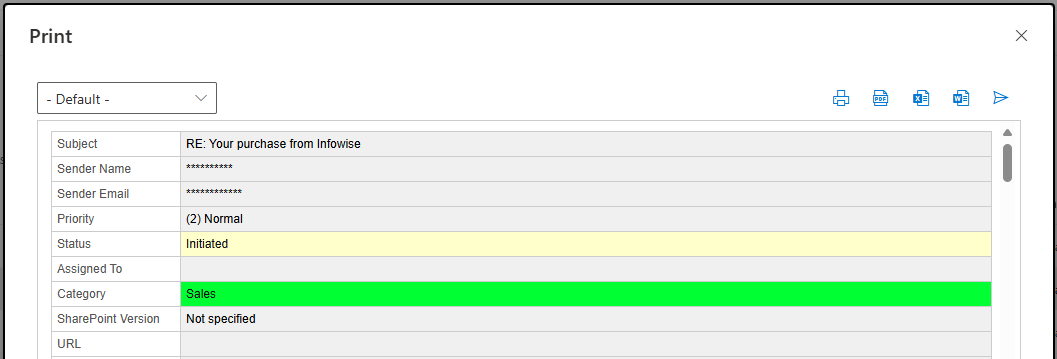
A new Word document generates and downloads, placeholders replaced with the item's actual values, layout fully preserved:
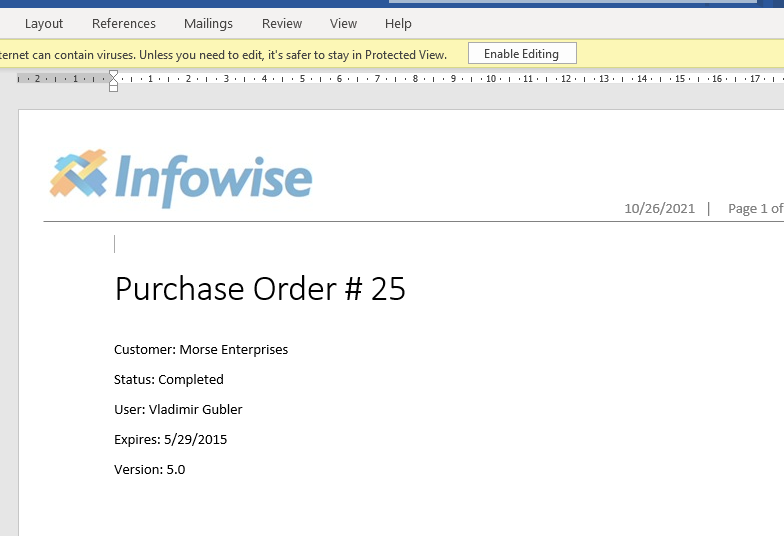
The same template also serves HTML and PDF output from the same preview, and the generated file can be printed, downloaded, or emailed directly from the browser.
Removing the click: Actions integration
On-demand generation suits the occasional document. Most document moments, though, are predictable: the order prints when the request is approved, the reminder letter goes out two weeks after the due date. Predictable moments belong to Actions.
Create a new action of type Print list items. Under the action settings, choose your print template and select Word as the output format:
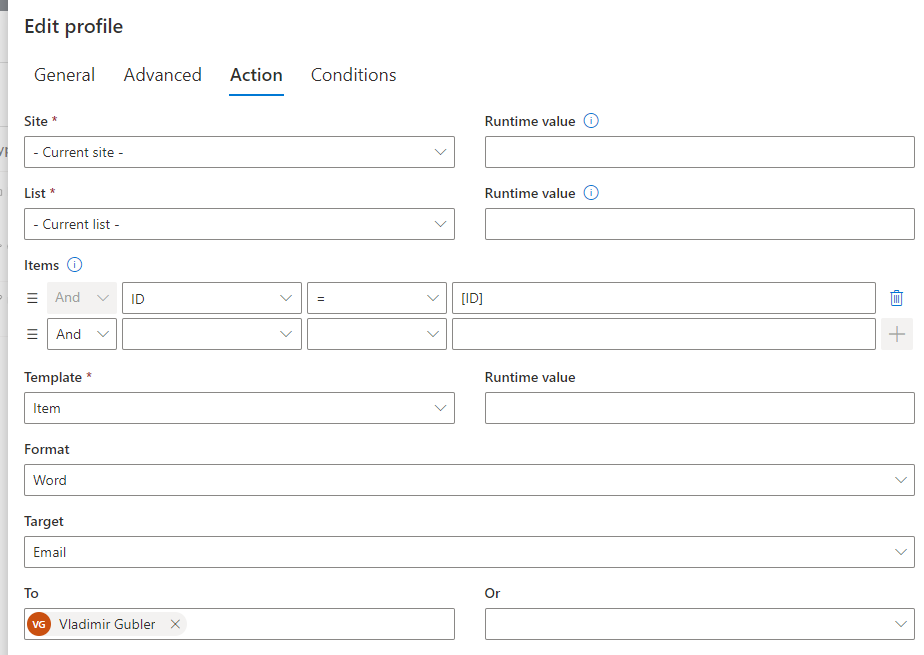
Then choose the trigger. Run it manually from a button for a human-initiated document. Run it on an event, such as Status changing to Approved, for process-driven documents. Or run it on a timer, two weeks after the Approval Date, for anything calendar-driven:
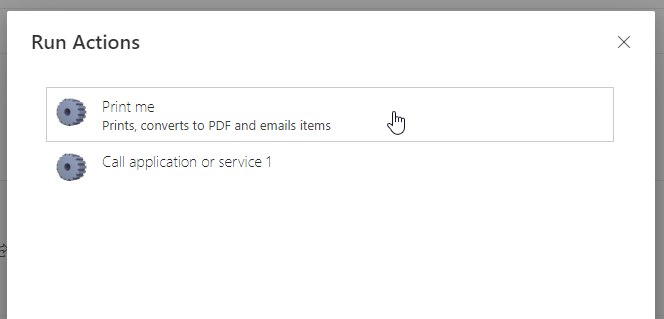
The action also decides where the document goes: emailed to a recipient, stored in a document library, or attached to the list item itself. That last choice quietly builds an archive, since every generated document stays with the record that produced it.
Three builds worth copying
The purchase order. Template: your PO letterhead with vendor, line items via a repeating section, and totals. Trigger: Status changes to Approved. Delivery: emailed to the vendor and attached to the request. The requester approves; the vendor has the PO before anyone thinks about it. The same pattern runs the purchase request systems many teams build first.
The inspection report. Template: the report form with findings, the inspector's name, and the photos, placed as images. Trigger: manual button, pressed when the inspector finishes. Delivery: stored in the Reports library, named by site and date. Paper process retired, formatting identical.
The expiry letter. Template: a renewal notice. Trigger: timer, 30 days before the Contract End date. Delivery: emailed to the contract owner, copy attached to the contract item. Nobody watches the calendar, and no renewal arrives as a surprise.
Each build is one template plus one action. The variety comes entirely from the three dials: what the template looks like, what triggers the run, and where the output lands.
Keeping templates healthy over time
Templates live for years, so give them a little governance. Keep the master .docx files in a dedicated library, so the template in the print settings always has a source of record someone can edit. When a column is renamed, remember the placeholder carries the old name until you update it; a quick generation test after any list schema change catches this in seconds. And when a department asks for a different layout of the same data, create a second print template rather than complicating the first: templates are cheap, and one template per document type stays readable forever.
Generation itself needs no maintenance. The template fills with whatever the data says on the day it runs, which is the whole point: documents stop being copies of the data and become views of it.
Frequently asked questions
Add your comment