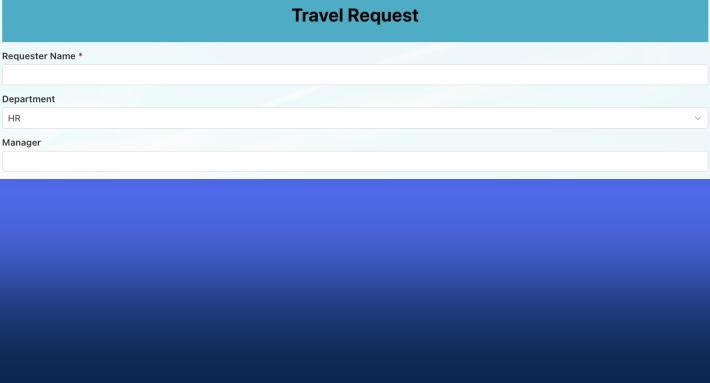
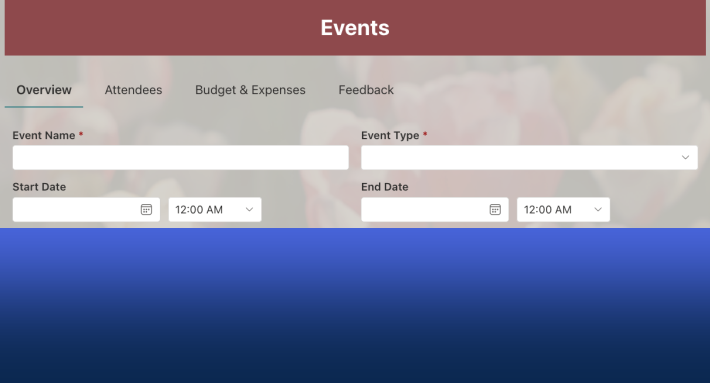
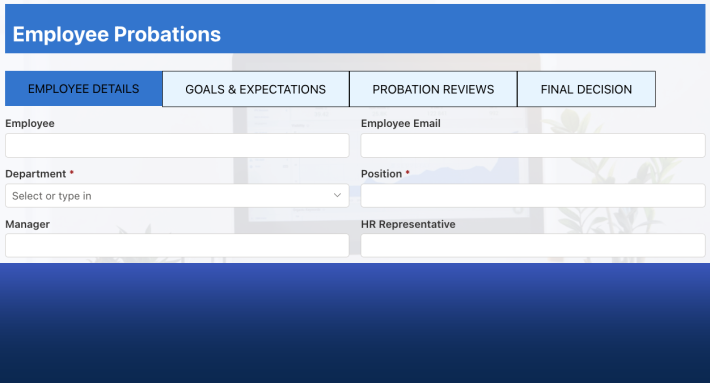
You can run complete shift scheduling inside SharePoint: schedules entered through smart forms, displayed as a color-coded grid, emailed to every worker as a weekly PDF, and reinforced with automatic reminders before each shift. Ultimate Forms supplies the pieces, and workers do not even need SharePoint accounts to receive their schedules. This guide covers why scheduling breaks down in the usual tools, what the SharePoint solution looks like, and the five-stage process it supports from availability to review.
Where scheduling goes wrong
Shift scheduling fails at the last step: communication. The schedule itself usually exists, in a spreadsheet, on a whiteboard, in the manager's head. What fails is getting it reliably to the people who work it.
Shift workers are the hardest audience in the company to reach. Many have no desk, no company laptop, and no habit of checking an intranet. The schedule arrives in a flood of email, or changes after it was printed, and the result is the same expensive event every time: a missed shift, discovered at the moment coverage was needed.
The fix is not a prettier spreadsheet. It is a system where the schedule lives in one place, changes update that place, distribution happens automatically in a format workers actually open, and reminders arrive before the shift, not after it was missed.
What the solution looks like
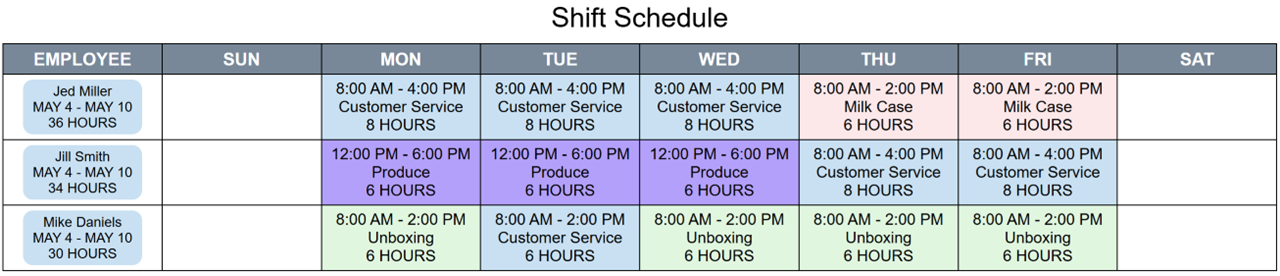
The Shift Scheduling solution for Ultimate Forms assembles that system from standard components, on a list view formatted with the Shift Schedule template from SharePointDashboards.com:
The working parts:
- Smart entry forms. Dynamic forms assign each worker's schedule quickly, with the form adapting to what is being entered.
- Copy functions for fast entry. Schedule days copy forward, so a stable week takes minutes and only the exceptions need typing.
- Color-coded views. Calendar entries colored by work category turn the grid into something readable at a glance: who is on, where, doing what.
- Automatic weekly generation. Each week's schedule is generated on schedule, so publishing is a rhythm rather than a task.
- The weekly PDF grid, emailed. A print template renders the week as a clean PDF grid and an action emails it to every worker. The schedule arrives as an attachment anyone can open on any phone.
- Shift reminders. Email reminders before upcoming shifts catch the case the weekly grid cannot: the worker who saw the schedule on Monday and forgot by Thursday.
- No accounts required. Distribution runs on email, so workers receive schedules and reminders without SharePoint licenses or logins.
Each piece is ordinary Ultimate Forms machinery: forms, actions, alerts, and print templates. The solution is the arrangement, and it installs as a template rather than a project.
The five stages of the scheduling cycle
A scheduling system earns its keep across a repeating cycle. Here is how each stage runs in SharePoint.
1. Collect availability
Before the schedule exists, the constraints do. A simple availability form lets workers state when they can and prefer to work, and the submissions land in a list the scheduler sees while planning. Collecting this in the same system that holds the schedule means preferences stop living in text messages and hallway conversations.
2. Create the schedule
The scheduler enters shifts in the list, assigning workers while balancing roles, experience, and the stated preferences. The copy functions carry the stable majority of the week forward; attention goes only to coverage gaps and exceptions. Because every shift is a list item, over- and under-staffing are visible as you build: the color-coded grid shows the hole in Thursday night before Thursday does.
3. Distribute it
Publish a week or two ahead, consistently. The weekly action generates the PDF grid and emails it to the team; the same output can be printed for the break-room board, and the live view stays available for anyone who wants to check from a browser. One source, three deliveries, no versions drifting apart.
4. Handle the changes
Schedules meet reality: swaps, sick calls, the Friday somebody's car dies. Changes go into the list, which means the live view is correct the moment the change is saved, and an action can notify the affected workers immediately. Pair the schedule with a swap-request form so the exchange is recorded and approved rather than whispered, and responsibility for finding coverage is always written down. The free Employee Shift Management template includes exactly this swap workflow.
5. Review and improve
Because every shift is data, the questions managers ask at month end have answers: attendance against schedule, overtime concentration, which shifts generate the most swaps, who reliably covers. Patterns that spreadsheets bury, absenteeism clustering on particular shifts, chronic under-coverage on particular days, show up in a simple dashboard, and next month's schedule starts smarter than this month's.
The data model underneath
The whole system rests on one well-shaped list, and it is worth shaping deliberately. Each shift is an item carrying the worker, the date, start and end times, the work category, and the location or station. Status belongs there too: Scheduled, Confirmed, Swapped, Missed, because the status column is what turns the grid into a record you can review later.
Keep categories and locations in their own small lookup lists rather than as free text. The color coding keys off the category, so a fixed set of categories means a consistent grid, and a lookup means nobody invents "Nights", "Night shift", and "NIGHT" as three different things. When the operation grows, a second location is a new row in the locations list, and every form, view, and report absorbs it without redesign.
One habit pays for itself at review time: never delete a shift that happened differently than planned. Mark it Swapped or Missed and let the record stand. The month-end questions in stage five can only be answered by a list that remembers what actually occurred, not just what was intended.
The quiet advantages of owning the system
Running scheduling inside SharePoint, rather than a third-party scheduling product, carries benefits that compound.
The data lives with everything else. Shift records sit beside the HR lists, the training records, and the leave requests, in the tenant you already govern, and leave requests can inform the schedule instead of surprising it.
The system bends to the operation, not the reverse. Categories, roles, locations, and rules are your columns and your conditions. When the operation adds a second site or a new shift pattern, the change is configuration, not a feature request to a vendor.
And there is no per-worker subscription. Distribution by email means the headcount that matters for licensing is the people managing the schedule, not the people receiving it, which is exactly the right way around for a workforce of fifty shift workers and two schedulers.
Getting started
The fastest route is the ready-made solution: install the template, load your workers and categories, and run a week in parallel with your current method. The Shift Scheduling for SharePoint webinar recording demonstrates the complete solution end to end and is the quickest way to see the moving parts before committing an afternoon.
One parallel week is usually all the evaluation the system needs. The morning the PDF grid arrives in every pocket without anyone sending it, the whiteboard starts looking like what it was: a single point of failure with handwriting.
Frequently asked questions
Add your comment