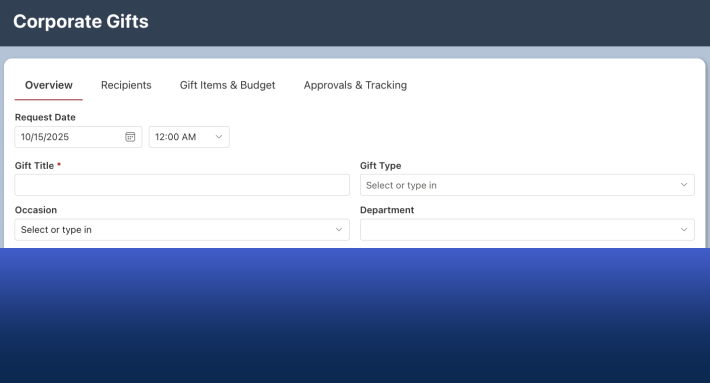
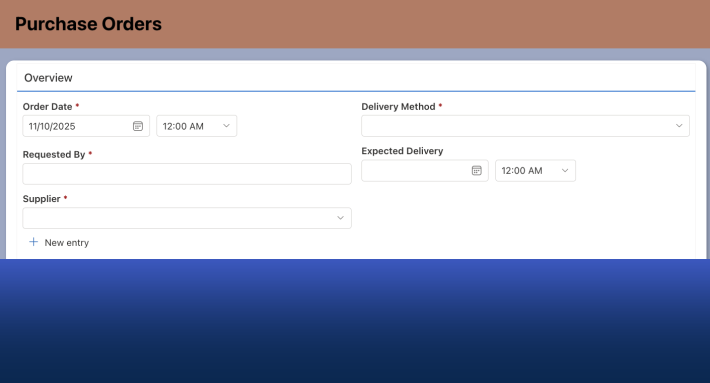
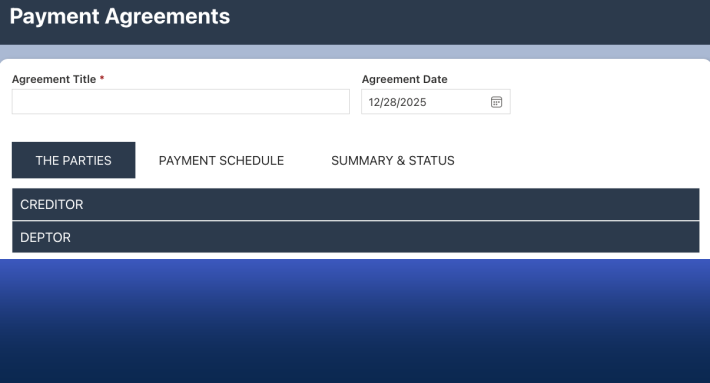
The shortest path from a SharePoint form to a finished document is a button on the form itself. The user fills in the item, clicks Print, and the PDF downloads. No print preview to open, no template to choose, no separate step to remember.
The Print component of Ultimate Forms powers the button, and the setup is two pieces: a print template that defines the document, and a button on the form that generates it. This guide builds both, then covers the options that make the button production-ready. For the full output system around it, see the complete document generation guide.
Why the button belongs on the form
Document generation usually lives a step away from the data. The user saves the form, finds the item in the view, opens the print preview, picks a template, picks a format, and finally gets the file. Every step is small. Together they are the reason people screenshot forms instead.
The form button collapses all of it into one click, at the one moment the user is already looking at the record. The quote is generated while the conversation is still happening. The completed inspection leaves as a PDF before the inspector moves on. The document becomes part of filling in the form, not a chore after it.
One option makes this genuinely safe rather than merely fast: the button can save the form first, so the document always reflects what is on screen, not what was last saved. More on that below, because it is the detail that separates this button from a shortcut.
Step 1: the print template
The button needs a template to render. If the list already has one, skip ahead; otherwise:
- Go to the list and click Design on the toolbar.
- Inside Ultimate Forms, click Print and export.
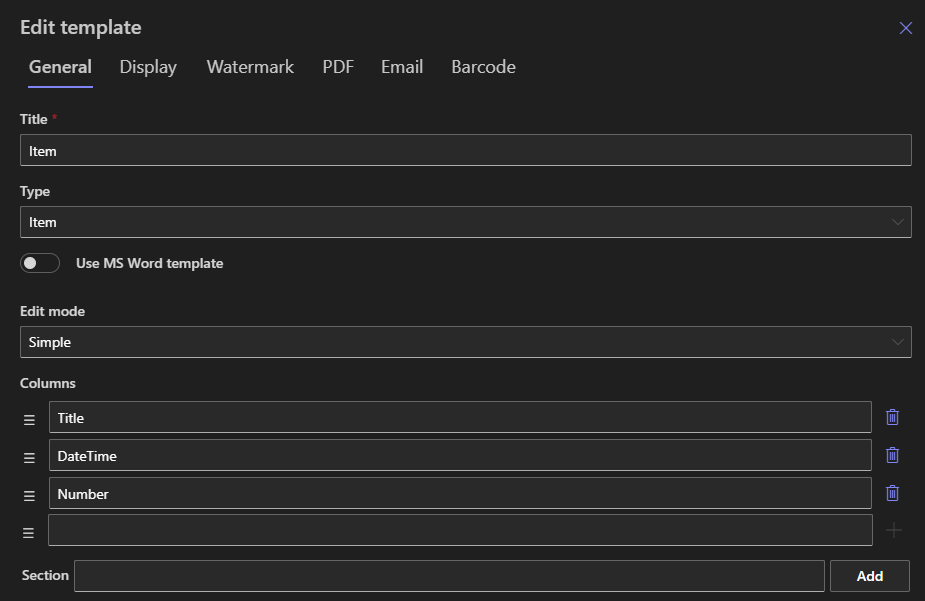
- Name the template and choose the columns it should include.
- Make sure the Type is Item. The button prints the single item open in the form, so a List-type template will not appear for selection.
- Save.
For a fully designed document, upload a Word file as the template instead: an ordinary document with column names in double square brackets, like [[Title]], which each item fills with its own values. The Word generation guide covers that path end to end, and the designed-reports guide covers making it polished.
Step 2: the button on the form
Now the form side, in Form Designer:
- On the main page of Ultimate Forms, click Form designer. If the list has no modern form yet, generate one or start from a blank canvas.
- Drag a new button from the control gallery onto the canvas.
- Click the button to open its properties.
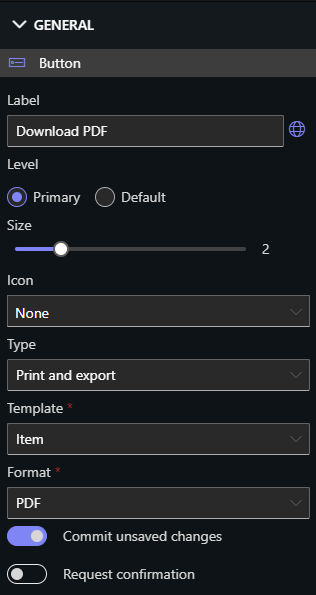
- Change the button's Type to Print and export.
- Select the print template. At least one Item-type template must exist before Form Designer opens for it to appear here.
- Select the output format: HTML, PDF, Word, or Excel.
- Publish the form.
That is a working document button. The options you skipped are what turn it into a finished one.
The options that matter
Commit unsaved changes. Toggle this on, and the form saves itself just before generating. On the Edit form, pending changes are written first. On the New form, the item is created and the form switches to Edit, then the document generates. Without this option, a user who types a correction and clicks Print gets a document of the record as it was. With it, what you see is what you print. For most buttons, this should simply be on.
Confirmation prompts. The button can ask before it acts, with your own prompt text, localized into the languages your users work in. Useful when generation has side effects the user should notice, such as the save itself.
Permission rules. The button can appear only when it should: when Status equals Approved, or only for certain roles. The rules pillar covers the conditions, and a quote button that appears only on approved quotes is worth the two minutes it takes.
One Print button, not two. The command bar carries its own Print button, and a form with both can confuse users into the longer path. The Command bar settings let you hide the built-in one, so the form's button is the only door.
Where the button earns its keep
Sales quotes. The rep fills in the quote form and clicks Print while the customer is still on the call. The Word output even lets them personalize the cover note before sending. No quote waits for a formatting pass.
Field inspections. The inspector completes the form on site and generates the PDF on the spot. With Commit unsaved changes on, the report always matches the final entries, including the correction made ten seconds before the click.
HR letters and confirmations. The employment confirmation, the training certificate, the equipment receipt: each is one record and one template, produced by whoever opens the form, with permission rules keeping the button to HR's side of the process.
Approved requests. A button that appears only when Status equals Approved turns the approval itself into the document moment. The requester sees the button appear, clicks it, and holds the formal record of the decision.
The pattern across all four: the person who owns the moment produces the document in it.
Testing it out
Open an item in its Display form and click the button: the document downloads. Edit the item, change a value, and click again: the form saves first, then generates, and the document carries the change. Then try the New form: click Print before saving, and watch the item be created, the form switch to Edit, and the document arrive.
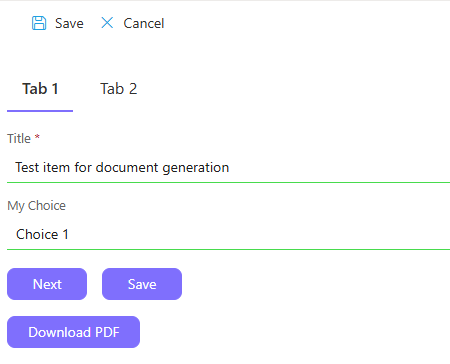
Those three tests cover the three states a user can click from, and they take two minutes together.
Beyond the button
Everything the Print component does is available to the button's template. Attachments can embed inside the generated PDF, so the request prints with its supporting documents inside it. Additional attachments defined at the template level ride along with every generated document, terms and conditions with every quote, without being attached to any item.
And when the document should exist without anyone clicking at all, the same template serves an action: generated, saved, or emailed in the background when the status changes to Approved, or on a schedule. The button and the action are not competitors. The button serves the person looking at the record; the action serves the process. Most lists that have one eventually grow the other, with the automation engine carrying the background half.
The sum is a form where the document is simply part of the workflow. The user who can fill in the form can produce the document, correctly formatted, from current data, in one click, and the training for it is the sentence "click Print."
Frequently asked questions
Add your comment